
What is Money?
Money is a system of trust, not a physical object. It’s an agreement — a social technology that lets humans trade value across time and space without bartering.
In the past, money was gold or silver — scarce metals that naturally limited how much could circulate. But modern money — fiat money — is state-issued credit. It’s not backed by gold, but by the government’s ability to enforce taxes, debt, and control.
Rudygard Lynch
So when you hold a euro, dollar, or yen — you’re not holding value.
You’re holding a claim on the system — a promise that others will accept it tomorrow.
That promise holds only as long as people believe the system is stable.
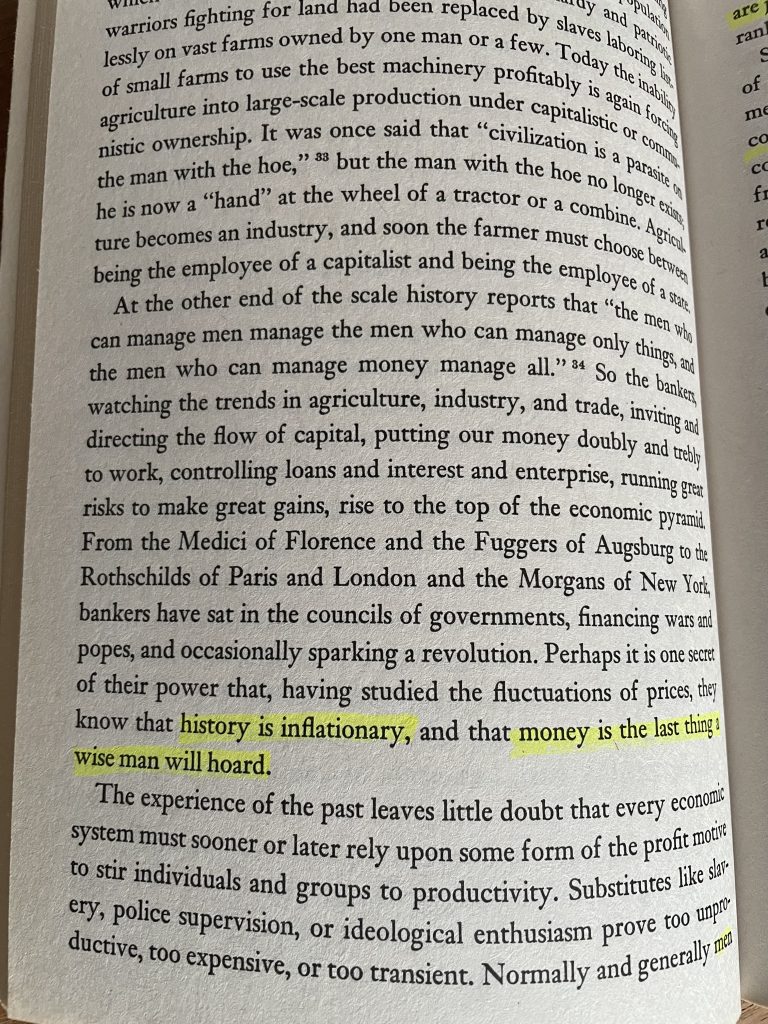
“Money is inflationary… money is the last thing a wise man will hoard.” 1
What is inflation?
Inflation is the loss of purchasing power of money. It means that over time, the same amount of money buys you fewer goods and services. Prices go up — not because things suddenly got more valuable, but because your money got weaker.
Why does it happen?
There are two main reasons:
- Money creation – When central banks (like the ECB or Fed) and commercial banks create new money through credit expansion, there’s more money chasing the same amount of goods. That dilutes the value of each euro or dollar. The root cause of long-term inflation is monetary inflation — printing money.
- Supply-demand imbalances – Sometimes, prices rise because production is disrupted (wars, pandemics, energy shocks) or because demand spikes. But that’s usually short-term. The sustained, structural inflation always comes from money creation.
The modern financial system is debt-based. Money is created when someone borrows. To keep the system stable, debt must constantly grow — and to make debt manageable, central banks keep printing and lowering rates. That’s why inflation is baked into the system. It’s not a bug — it’s a feature.
Juraj Karpiš
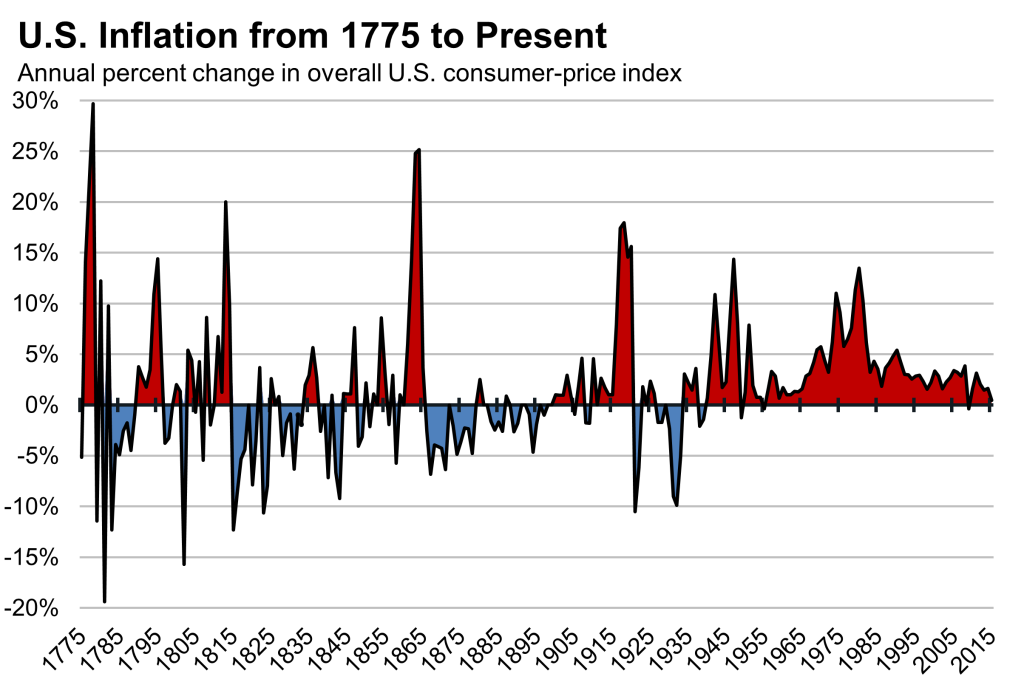
Inflation isn’t rising prices. It’s an increase in the money supply.
Your savings lose value every year.
Governments quietly tax you through inflation — it’s a hidden tax.
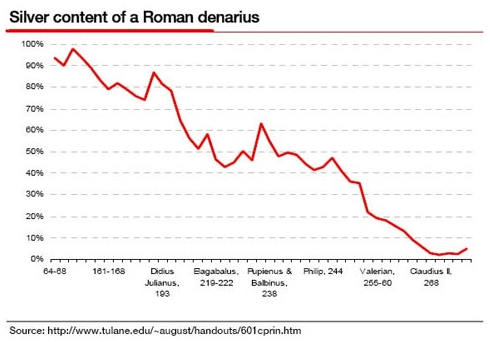
Inflation is how empires pay for wars, welfare, and waste — without asking for your permission. The state doesn’t need to confiscate your wealth directly. It just prints. Every new unit of currency dilutes existing wealth — a silent expropriation.
What to invest in during inflation?
“Real estate” – Warren Buffett 2
“Investment in your skills, your own business is a good option in inflationary times” 3 – Warren Buffett
In recession + inflation, most assets either:
- Lose value (stocks, real estate, crypto),
- Or preserve purchasing power (cash, short-term gold, productive businesses, long-term).
- Chapter VIII: Economics and History, p. 54. The Lessons of History, Will Durant ↩︎
- https://youtube.com/shorts/qF0DcK6HCOo?si=c9-kOhq8omXEXS9T ↩︎
- https://youtube.com/shorts/yGTJ4AtqTII?si=_L4ZwqHtUY1G4RgT ↩︎
Notes
Real wealth is what doesn’t inflate: land, skills, energy, productive assets, relationships, and knowledge.
Empires Cycle
| Phase | Character | Money Type | Outcome |
|---|---|---|---|
| 1. Foundation | Hard work, discipline | Hard money (gold, silver) | Trust builds |
| 2. Expansion | Growth, ambition | Partially backed credit | Prosperity |
| 3. Peak | Comfort, consumption | Fiat and credit | Illusion of wealth |
| 4. Decline | Corruption, inequality | Easy money | Distrust, inflation |
| 5. Collapse | Chaos, reset | Worthless currency | Regime change |
| 6. Rebirth | Reform, new discipline | Hard money | Renewal |
Buffett doesn’t try to time recessions — he prepares:
- Buy gradually (e.g., monthly DCA (Dollar-cost averaging)) over the next 6–12 months.
- Ignore short-term market noise.
- Focus on value: “Be fearful when others are greedy, and greedy when others are fearful.”
If markets drop 20–30%, that’s your moment — not your fear.
Inflation rewards builders, producers, and problem-solvers — not savers.
Leave a Reply