Author: tomas

  • The kid who called me with nothing

    A 17-year-old booked a call and offered to build websites for us.

    No business domain. Gmail address. No real projects — just friends who vibe-coded some crappy landing pages.

    I said no. Then I asked him a few questions.

    1. Why do you sell websites? Do you know how to create them and like doing it? If not, find something else to sell.
    2. Build 3-4 real websites for friends/businesses in the area and showcase them on your own portfolio site. No fake projects.
    3. Learn Google Ads basics, create search campaign with a small budget 30-50$/month
    4. List your portfolio on Fiverr…

    If you do not like building websites, then do not focus on building a website dev studio. Focus on sales, mkt, pm instead.

    That is all.

  • How states and great powers typically deal with high debt

    Historically, there are only four real paths. It’s always about shifting losses — the question is who pays.

    1. Growth (the cleanest, but hardest)

    • The economy grows faster than debt
    • Debt shrinks relative to GDP
    • Rare, requires productivity, innovation, stability

    Examples: USA after WWII, Germany after 1950

    Reality: today almost impossible without additional tools

    2. Inflation (the most commonly used)

    • Debt stays the same in nominal terms
    • Purchasing power falls → debt is “inflated away”
    • A hidden tax on savers and the middle class

    Used when:

    • debt is in the domestic currency
    • the central bank cooperates with the state

    Examples:
    1970s USA, post-war Europe, today’s USA/EU

    Inflation is politically the least painful — people don’t understand it immediately.

    3. Financial repression

    • Artificially low interest rates
    • Forced purchases of government bonds (banks, funds)
    • Capital controls, regulations, taxes, withdrawal limits

    Effect:
    negative real yields → creditors pay debtors

    Examples:
    USA 1945–1980, Japan long-term, EU indirectly

    4. Default / restructuring

    • Partial debt write-offs
    • Extended maturities
    • Lower interest rates

    Used when denial is no longer possible

    Examples:
    Greece 2012, Argentina repeatedly, Russia 1998

    5. War (an extreme reset)

    • Physical destruction = economic reset
    • Debts erased via inflation, default, or a new order

    Historically common, politically unpopular today — but not impossible

    How high household debt is dealt with

    Households have fewer options than states. Typical scenarios:

    A. Inflation + wages (soft scenario)

    • Real wages rise
    • Debts remain nominally the same
    • Installments “hurt less”

    Works only if:

    • loans have fixed interest rates
    • incomes grow at least as fast as inflation

    B. Refinancing / extending maturities

    • Longer repayment periods
    • Lower monthly payments
    • Higher total interest paid

    Very common
    Politically safe

    C. Bankruptcy / personal debt relief

    • Part of the debt written off
    • Loss of assets and credit score
    • Social and psychological costs

    Used en masse during crises
    USA 2008–2012

    D. Selling assets

    • Real estate, investments
    • Reduced consumption
    • Economy-wide deleveraging

    Leads to crises
    (deflationary pressure)

    E. Moral hazard (politics)

    • State rescues debtors
    • Partial debt forgiveness
    • Losses transferred to taxpayers

    Examples:
    mortgage moratoria, COVID measures

    Summary

    Debts are never resolved without pain.
    The pain is only shifted.

    • Inflation → savers
    • Taxes → workers
    • Default → creditors
    • Recession → employees
    • Financial repression → pension funds
  • Wealth

    Wealth isn’t money. It’s the things people want that you can produce.

    Money is just a way of moving wealth around. Wealth is cars, houses, food, software, ideas, tools, experiences — everything people value.

    You don’t get wealthy by taking money from others. You get wealthy by creating something that makes the world richer — something that didn’t exist before or that exists in a better form because of you.

    A farmer grows food; a developer writes code; an engineer builds a bridge. They all create new wealth. The economy is simply a network of people trading the wealth they’ve created.

    The mistake most people make is thinking that wealth is zero-sum — that someone’s gain must be someone else’s loss. That’s true for money in the short term, but not for wealth. Wealth can be created out of knowledge, effort, and leverage.

    So, to become wealthy, don’t think about getting money.

    Interesting video: How Gold Destroyed Spain [They were confusing money with wealth. Money is just a medium of exchange. Wealth is the ability to produce things. UK/Netherlands used Spains money to build industrialization and stock market]

    Think about creating something valuable. Money will follow, because it’s just how society keeps score of who’s contributed what.

    Wealth is the measure of how much you’ve expanded the world’s possibilities.

    Money Is Not Wealth (Paul Graham)

    If you want to create wealth, it will help to understand what it is. Wealth is not the same thing as money. [3] Wealth is as old as human history. Far older, in fact; ants have wealth. Money is a comparatively recent invention.

    Wealth is the fundamental thing. Wealth is stuff we want: food, clothes, houses, cars, gadgets, travel to interesting places, and so on. You can have wealth without having money. If you had a magic machine that could on command make you a car or cook you dinner or do your laundry, or do anything else you wanted, you wouldn’t need money. Whereas if you were in the middle of Antarctica, where there is nothing to buy, it wouldn’t matter how much money you had.

    Wealth is what you want, not money. But if wealth is the important thing, why does everyone talk about making money? It is a kind of shorthand: money is a way of moving wealth, and in practice they are usually interchangeable. But they are not the same thing, and unless you plan to get rich by counterfeiting, talking about making money can make it harder to understand how to make money.

    Money is a side effect of specialization. In a specialized society, most of the things you need, you can’t make for yourself. If you want a potato or a pencil or a place to live, you have to get it from someone else.

    How do you get the person who grows the potatoes to give you some? By giving him something he wants in return. But you can’t get very far by trading things directly with the people who need them. If you make violins, and none of the local farmers wants one, how will you eat?

    The solution societies find, as they get more specialized, is to make the trade into a two-step process. Instead of trading violins directly for potatoes, you trade violins for, say, silver, which you can then trade again for anything else you need. The intermediate stuff– the medium of exchange— can be anything that’s rare and portable. Historically metals have been the most common, but recently we’ve been using a medium of exchange, called the dollar, that doesn’t physically exist. It works as a medium of exchange, however, because its rarity is guaranteed by the U.S. Government.

    The advantage of a medium of exchange is that it makes trade work. The disadvantage is that it tends to obscure what trade really means. People think that what a business does is make money. But money is just the intermediate stage– just a shorthand– for whatever people want. What most businesses really do is make wealth. They do something people want.

  • Machiavelli

    1. Power Is About Reality, Not Ideals

    Machiavelli’s core break with earlier thinkers:

    • Politics is not about how people should behave
    • It is about how people do behave

    Key idea:

    A ruler who governs by ideals will lose power to those who govern by reality.

    Implication:
    Ethics are subordinate to survival of the state.


    2. Virtù vs. Fortuna (Skill vs. Luck)

    Virtù

    • Not virtue in the moral sense
    • Means competence, decisiveness, strength, adaptability
    • Ability to act ruthlessly when necessary

    Fortuna

    • Luck, chance, chaos, external forces
    • Uncontrollable but manageable through preparation

    Key insight:

    Fortune favors the bold and punishes the hesitant.

    Strong leaders shape events rather than react to them.


    3. Fear Is More Reliable Than Love

    The most famous (and misunderstood) principle:

    • Love is conditional
    • Fear is predictable

    Rule:

    It is better to be feared than loved — if you cannot be both.

    But:

    • Never be hated
    • Fear must come from respect, not cruelty for cruelty’s sake

    Practical logic:
    People will betray love when it costs them.
    They hesitate to betray fear when consequences are clear.


    4. Cruelty Must Be Swift, Rare, and Final

    Machiavelli is not pro-violence. He is anti-indecision.

    • Necessary cruelty should be:
      • Applied once
      • Applied quickly
      • Applied decisively
    • Benefits should be:
      • Gradual
      • Ongoing
      • Remembered positively

    Why:
    Repeated small cruelties create resentment.
    One decisive act creates stability.


    5. Appear Virtuous, Be Dangerous When Needed

    Power requires optics.

    A ruler should:

    • Appear merciful, honest, faithful, religious
    • Be ready to act against all of these if survival demands it

    Key concept:

    Men judge more by appearances than by reality.

    This is early political branding.


    6. Laws Are Not Enough — Force Is Necessary

    Two ways to rule:

    1. Law (for citizens)
    2. Force (for enemies)

    Effective rulers master both.

    • Law without force = weakness
    • Force without law = instability

    7. Control the Military or Lose Power

    One of Machiavelli’s strongest warnings:

    • Mercenaries are dangerous
    • Auxiliaries are unreliable
    • Only your own forces secure power

    Translated today:

    • Control your core capability
    • Never outsource the thing that keeps you in power

    8. Avoid Being Hated at All Costs

    What creates hatred:

    • Taking property
    • Taking women
    • Arbitrary punishment

    A ruler can survive being feared.
    A ruler rarely survives being hated.


    9. People Are Self-Interested

    Machiavelli’s view of human nature is blunt:

    • People are ungrateful
    • Self-preserving
    • Opportunistic
    • Loyal only when it benefits them

    Therefore:
    Systems must be built assuming self-interest, not virtue.


    10. Stability Is the Ultimate Moral Good

    For Machiavelli:

    • Chaos is worse than harsh order
    • Weak goodness is worse than strong authority

    The ruler’s true duty:
    Maintain the state.

    If the state collapses, no virtue survives.


    Machiavelli in One Sentence

    Power belongs to those who understand reality, act decisively, control force, manage perception, and adapt faster than circumstances change.

  • Money

    What is Money?

    Money is a system of trust, not a physical object. It’s an agreement — a social technology that lets humans trade value across time and space without bartering.

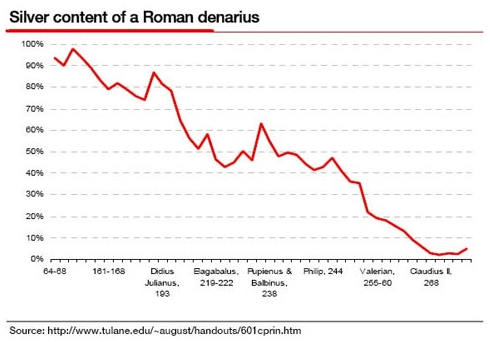
    In the past, money was gold or silver — scarce metals that naturally limited how much could circulate. But modern money — fiat money — is state-issued credit. It’s not backed by gold, but by the government’s ability to enforce taxes, debt, and control.

    Rudygard Lynch

    So when you hold a euro, dollar, or yen — you’re not holding value.
    You’re holding a claim on the system — a promise that others will accept it tomorrow.

    That promise holds only as long as people believe the system is stable.

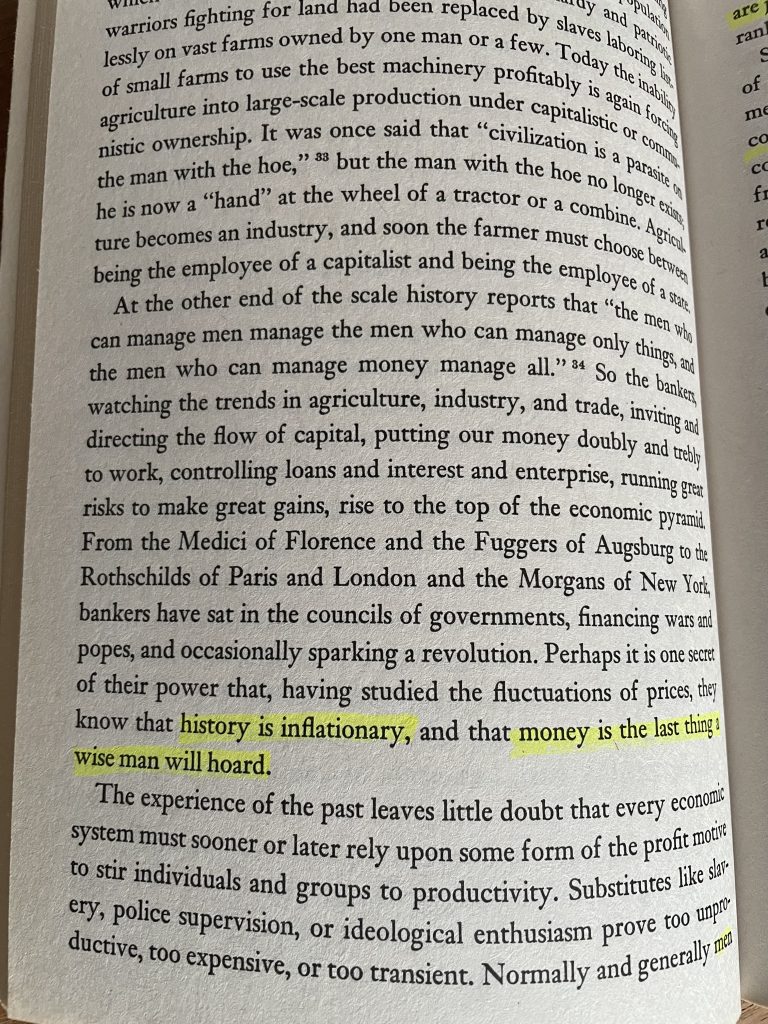
    “Money is inflationarymoney is the last thing a wise man will hoard.” 1

    What is inflation?

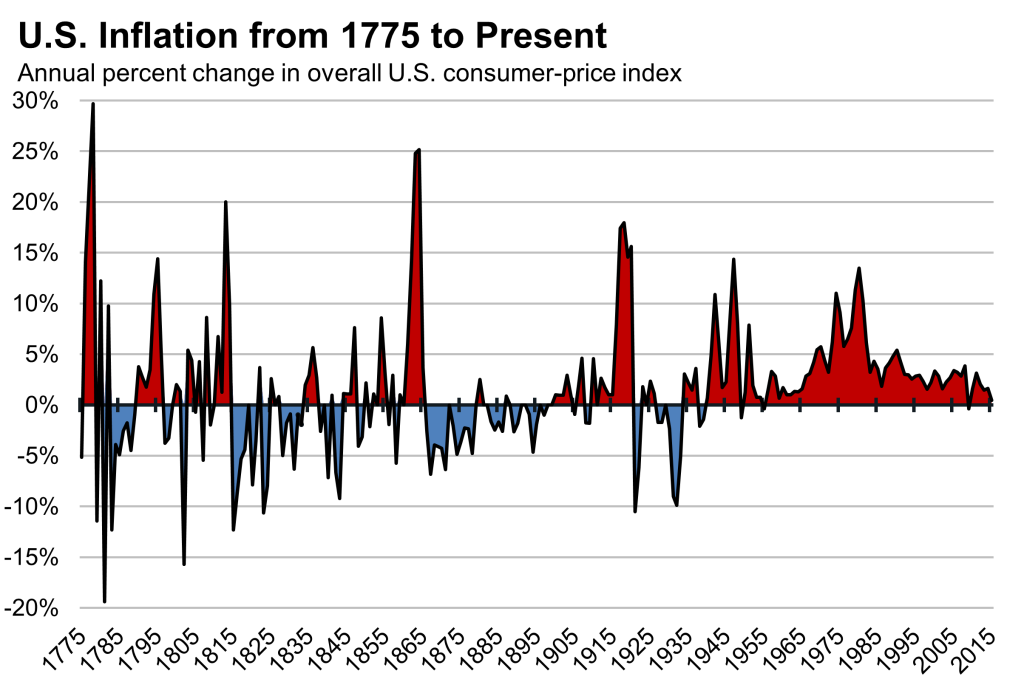
    Inflation is the loss of purchasing power of money. It means that over time, the same amount of money buys you fewer goods and services. Prices go up — not because things suddenly got more valuable, but because your money got weaker.

    Why does it happen?

    There are two main reasons:

    1. Money creation – When central banks (like the ECB or Fed) and commercial banks create new money through credit expansion, there’s more money chasing the same amount of goods. That dilutes the value of each euro or dollar. The root cause of long-term inflation is monetary inflation — printing money.
    2. Supply-demand imbalances – Sometimes, prices rise because production is disrupted (wars, pandemics, energy shocks) or because demand spikes. But that’s usually short-term. The sustained, structural inflation always comes from money creation.

    The modern financial system is debt-based. Money is created when someone borrows. To keep the system stable, debt must constantly grow — and to make debt manageable, central banks keep printing and lowering rates. That’s why inflation is baked into the system. It’s not a bug — it’s a feature.

    Juraj Karpiš

    Inflation isn’t rising prices. It’s an increase in the money supply.

    Your savings lose value every year.

    Governments quietly tax you through inflationit’s a hidden tax.

    Inflation is how empires pay for wars, welfare, and waste — without asking for your permission. The state doesn’t need to confiscate your wealth directly. It just prints. Every new unit of currency dilutes existing wealth — a silent expropriation.

    What to invest in during inflation?

    “Real estate” – Warren Buffett 2

    “Investment in your skills, your own business is a good option in inflationary times” 3Warren Buffett

    In recession + inflation, most assets either:

    • Lose value (stocks, real estate, crypto),
    • Or preserve purchasing power (cash, short-term gold, productive businesses, long-term).
    1. Chapter VIII: Economics and History, p. 54. The Lessons of History, Will Durant ↩︎
    2. https://youtube.com/shorts/qF0DcK6HCOo?si=c9-kOhq8omXEXS9T ↩︎
    3. https://youtube.com/shorts/yGTJ4AtqTII?si=_L4ZwqHtUY1G4RgT ↩︎

    Notes

    Real wealth is what doesn’t inflate: land, skills, energy, productive assets, relationships, and knowledge.

    Empires Cycle

    PhaseCharacterMoney TypeOutcome
    1. FoundationHard work, disciplineHard money (gold, silver)Trust builds
    2. ExpansionGrowth, ambitionPartially backed creditProsperity
    3. PeakComfort, consumptionFiat and creditIllusion of wealth
    4. DeclineCorruption, inequalityEasy moneyDistrust, inflation
    5. CollapseChaos, resetWorthless currencyRegime change
    6. RebirthReform, new disciplineHard moneyRenewal

    Buffett doesn’t try to time recessions — he prepares:

    • Buy gradually (e.g., monthly DCA (Dollar-cost averaging)) over the next 6–12 months.
    • Ignore short-term market noise.
    • Focus on value: “Be fearful when others are greedy, and greedy when others are fearful.”

    If markets drop 20–30%, that’s your moment — not your fear.

    Inflation rewards builders, producers, and problem-solvers — not savers.

  • Dealing With Stress At Work That Could Cost You Opportunities

    You get an unexpected call from the client who is complaining about the missed deadline caused by your team. He is stressed out and acting rather unprofessionally.

    You feel the tension.

    When stress is tied to work, sales, or reputation, it feels sharper because your identity and survival seem to be at stake.

    The mind clings: “If I lose this, I lose my future clients. I lose myself…” or is it just an illusion?

    What is the root of the stress? Fear?

    Notice: the stress is not only about the project, but about how others see you and whether you will “win” or “lose.” See that clearly.

    When seen, fear loosens its power.

    Tactics to deal with the stress at work

    First-Principles Listening

    When my kids or someone at work is upset, I force myself to listen first. Not to argue — just to hear.

    Once they feel heard, solutions come more easily.

    Delay Decisions

    If you’re triggered, don’t respond instantly (email, fight, or argument).

    Say: “Let me think about this for a minute.” Even 5–10 minutes can prevent big mistakes.

    Compassion for self and others

    Say inwardly: “I am doing my best. That is enough.”

    Then shift focus outward: “How can I genuinely help this person in front of me?” Service replaces self-concern.

    Notes

    Sudden stress is a chance to pause, zoom out, and act like an engineer, not a reactor. Treat it like rocket turbulence — don’t fight the air, adjust trajectory.

  • Daily Anti-Stress Cheat Sheet: For Quick Stress Relief

    This is a short and easy-to-remember to-do list for managing stress in both home and work situations.

    1. Pause and slow down your breathing.

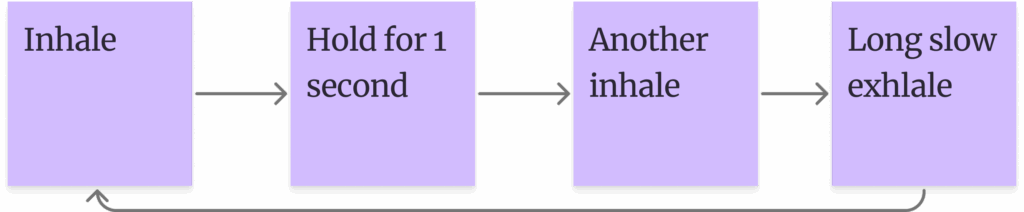
    Close your eyes. Inhale through the nose. Do not exhale. Take a second hold and do a shorter inhale on top of the first. Long slow exhale through the mouth.

    Repeat 3-4 times. [Idea from hubermanlab newsletter]

    2. Change the environment.

    Physically shift your environment.

    I.e., going on a short walk outside (10-15 minutes), lying down on the floor in another room, or driving in the car alone and doing a sound reset, such as playing songs you love and humming along.

    [Idea from Rick Rubin, Creative Act]

    3. Play songs you love.

    Loud. Hum along. For at least 5-10 minutes.

    4. Lower Your Voice, Slow Your Speech.

    Especially at home with children or a partner. If you raise your voice, chaos multiplies. Slow down, drop the pitch. This signals authority and calm — people follow your tone more than your words in stressful moments.

    5. Name the Problem, Don’t Attack the Person.

    “The noise is too much, and I’m getting frustrated.”

    “The rule is that homework comes before games and TV. This conflict is happening because we’re breaking that rule.”

    Externalize the problem instead of turning the person into the problem.

    [Jordan Peterson]

    Side notes

    Stress is a signal. It tells you you’re at the edge of your capacity — overwhelmed, uncertain, or about to lose control.

    What matters is how you structure your response.

    Stress overwhelms weak systems. Regular exercise, proper sleep, and nutrition give you more buffer. You cannot think straight if your physiology is under siege.

    You can’t escape stress. Life is suffering — but voluntary confrontation with chaos transforms it into meaning. The key is to discipline yourself to respond with order, not with escalation. When you model that — calmly, consistently — your family and colleagues will mirror it.

  • Be Present? Here’s What It Really Means and Why It Matters

    Be present” is advice we hear everywhere.

    But what does it actually mean?

    Can being present help you be happier?

    I watched an interview with Ondrej Novotny, the co-founder of Oktagon MMA organization, on Vojta Ziska’s podcast.

    The interviewer’s question was about what makes such a successful founder happy.

    Ondrej mentioned a Buddhist principle he likes — “Happiness is irrelevant, happiness is to be here and now…

    So, I researched a bit about what this actually means in the context of Buddhism and added a take from my favourite authors, such as Rick Rubin and Huberman.

    Here are my notes and ideas that I started practicing, and they seem relevant.

    In Buddhism, presence isn’t just about enjoying the moment — it’s about meeting reality as it is.

    Buddhism teaches that suffering comes from resisting reality. Wanting things to be different, clinging to pleasure, avoiding discomfort.

    Presence means seeing things without filters, expectations, or judgment.

    Being present is noticing what’s happening right now without clinging or resisting.

    It’s not drifting into yesterday’s regrets or tomorrow’s worries, but resting in this unfolding moment.

    Pleasant things come and go. Unpleasant things come and go.

    So what exactly to notice?

    Everyday Sensory Presence

    Walking – feel your feet touch the ground, notice the rhythm of your steps. Showering – the warmth of the water, the scent of soap, the sound of droplets. Driving – the grip of the wheel, the flow of the road, the hum of the engine. Typing – the click of keys, the movement of your fingers. Holding your child’s hand – the warmth, the pressure, the aliveness of the moment.

    Emotional Presence

    When joy arises, truly feel it fully, rather than rushing past it.

    When irritation arises, notice “tightness” in the chest or heat in the face before reacting.

    Relational Presence

    In conversation, listen without preparing your reply, notice tone, pauses, and eye contact.

    With family instead of half-listening while on your phone, give full attention.

    Micro-Presence Pauses

    Before opening an email, one conscious breath.

    At a red light, notice posture and shoulders.

    Before bed, feel the body settling into rest.

    What happens when we start to focus on noticing and being there in the moment?

    Mind quiets down. When we stop holding on or pushing away, the mind naturally settles. You notice how much of your mental energy is usually eaten by replaying the past or predicting the future. By anchoring in the moment (breath, body, surroundings), that constant noise begins to settle.

    Clarity grows. You see thoughts, feelings, and impulses as events in the mind rather than as absolute truths. Anger, stress, craving — you can watch them arise and fade, instead of being dragged around by them.

    Less reactivity, more choice. Instead of snapping, escaping, or overthinking, you start to respond instead of react. That means more freedom in how you handle people, stress, or conflict.

    Joy in small things. Ordinary experiences (a sip of tea, a walk, your child’s laugh) become vivid. Presence lets you see details you usually rush past.

    Acceptance and compassion. By meeting reality as it is, you resist less. You soften toward yourself (instead of constantly criticizing) and toward others (seeing their struggles too).

    Shift in identity. Over time, you realize: “I am not my thoughts or emotions, I am the space noticing them.” This loosens ego and makes room for a more profound sense of peace.

    How to be present in stressful situations?

    In stress, presence becomes your anchor.

    The storm may rage, but you don’t have to be swept away.

    Here is my cheat sheet for quick stress relief.

    What if the stress is caused by a situation at work where my reputation or future opportunities may be affected? Read my notes here.

    Side Notes

    ➔ Presence reveals life’s truths: everything is changing, nothing is fixed as “me” or “mine,” and chasing after moments only creates stress.

    By seeing reality directly, we experience freedom and peace.

    ➔ Typically, we react to thoughts and emotions automatically. Presence creates a small but powerful gap — enough space to choose wisely instead of reacting blindly.

    Welcome to WordPress. This is your first post. Edit or delete it, then start writing!